


25 years have passed since the August 17th Earthquake!
Prof. Dr. Naci Görür: We must create earthquake-resilient cities
It has been exactly 25 years since the August 17, 1999 earthquake that devastated Turkey. Unfortunately, Turkey still has not made the necessary preparations for earthquakes. According to statistics, there are nearly 4 million houses in Istanbul that are at risk of earthquakes. Moreover, this figure does not include workplaces and social buildings. Prof. Dr. Naci Görür, who participated in Çelik Mikrofon, a YouTube channel launched to raise awareness on earthquake-resistant structures, stated that earthquakes, which he described as "the pulse of the world", are inevitable and pointed out that it is not earthquakes that kill people, but collapsing buildings, and added: "It is important to reduce the number of storeys and use lightweight materials in the construction of new buildings."
The wounds inflicted by the Marmara Earthquake, which occurred exactly 25 years ago on August 17, 1999 at 03.02 am with a magnitude of 7.4 and lasted 45 seconds, are still fresh despite all the years that have passed. In the earthquake that devastated Kocaeli, Yalova, Sakarya, Istanbul and Düzce, 17,480 people lost their lives and 43,953 people were injured. Approximately 200 thousand people were left homeless, 66 thousand 441 houses and 10 thousand 901 workplaces were destroyed. Nearly 16 million people were affected to varying degrees, 285,211 houses and 42,902 workplaces were damaged. Years have passed, but unfortunately, the data shows that our earthquake record is still very poor. However, academics have been trying to raise public awareness for years. They have been tirelessly calling on the authorities to take action on this issue as soon as possible. Prof. Dr. Naci Görür is one of these experts. Prof. Dr. Görür, who has spent his life working to prepare Turkey for earthquakes, was the guest of Çelik Mikrofon, a YouTube channel that was launched in order to exchange ideas for solutions and raise awareness in the public.
"If there is no earthquake, the world will end"
Describing earthquakes as the pulse of the earth, geoscientist and academician Prof. Dr. Görür said, "The earth will produce earthquakes because of its creation. If there is no earthquake, the world will end. So earthquake is kind of like the pulse of the world. The first thing we need to remember is that earthquakes do not kill people. We have built our houses in earthquake zones because these are also the most fertile places in the world. However, we need to reduce the damages of earthquakes by building, designing and constructing cities in accordance with its dynamics... In the modern world, cities are prepared for earthquakes before the earthquake. The people of Kahramanmaraş and Hatay should question the administrators when they come to their aid: "Where were you until now, why didn't you make my place earthquake resistant? In Japan, earthquakes happen like ours, and while tens of thousands of people die in our country, 3-4 people die there by chance. Because it is possible to make the city earthquake resistant before the earthquake happens."
"Most of the buildings in the world are made of steel"
Stating that steel structures are especially preferred to create earthquake-resistant cities in the world, Prof. Dr. Görür drew attention to the following:
"When politicians talk about preparing a city for an earthquake, they say how many buildings they will build. They do not say how many buildings they will demolish and turn into green or multi-purpose areas. There is a rent-seeking mentality, this is wrong. In the construction of new buildings, it is necessary to reduce the number of storeys and make them from lightweight materials. For example, steel is suitable for this. I say steel because all over the world, in earthquake countries, a significant portion of buildings are made of steel. In addition, steel buildings are built faster. Leaving everything else aside, if we are worried about time in preparing Istanbul for an earthquake, it is possible to solve this problem in this way. In the earthquake city, in its village, in its accident, it is time to use and explain to the public the strength of modern technologies in various building constructions and earthquake resistant materials."
Those who are concerned about the earthquake are at Çelik Mikrofon
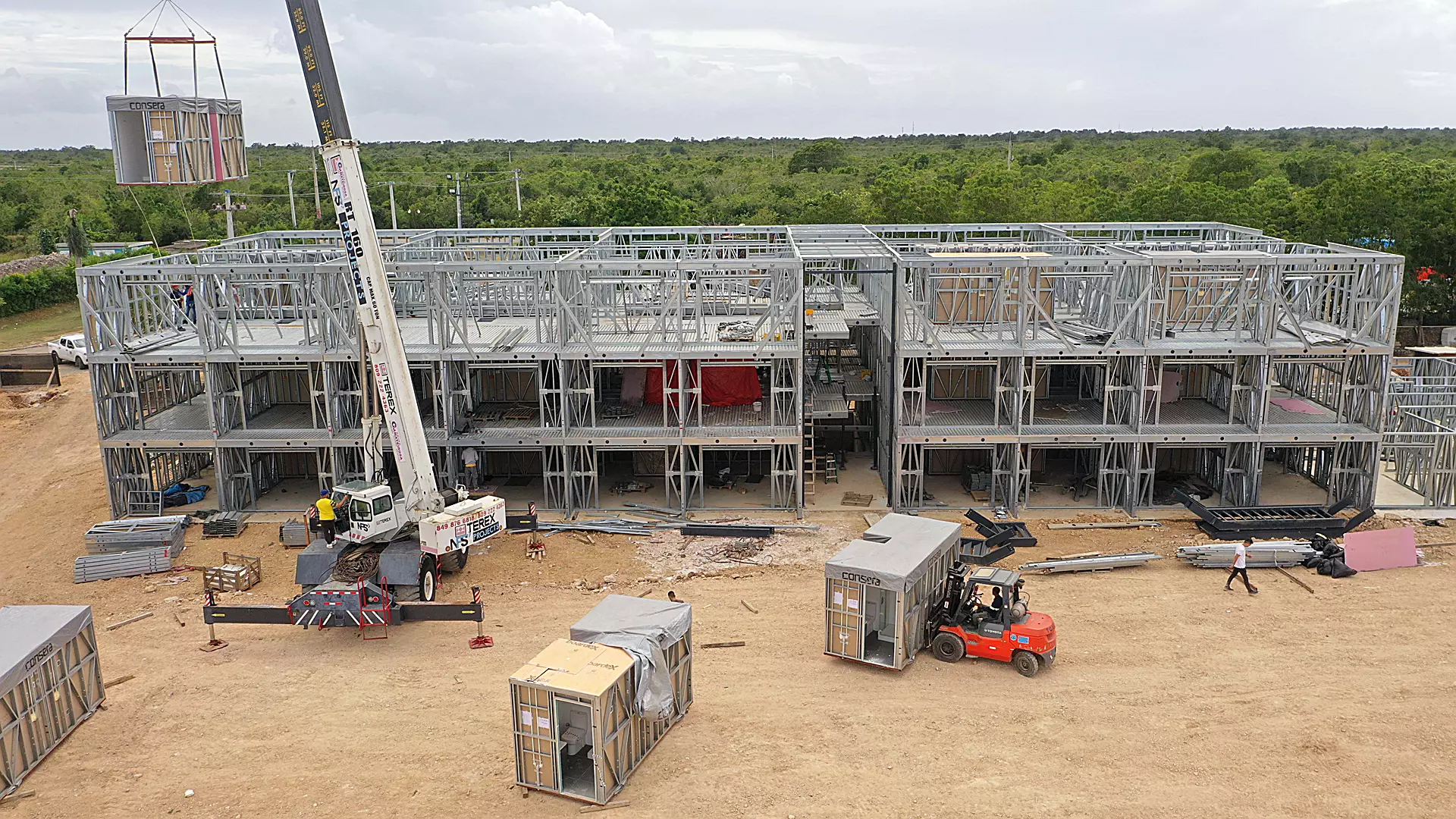
Çelik Mikrofon, in which Prof. Dr. Görür shares his earthquake-related information and solution proposals, was launched as a YouTube channel that enables partners of interest who are concerned about the earthquake to exchange ideas for solutions. A kindergarten will be built in the name of the participants of the program, which is led by Consera, which aims to build earthquake-resistant buildings with structural steel and modular steel structures. The first guest is Prof. Dr. Naci Görür, and the program will be attended by a wide range of guests from architects to engineers and academics, and the issue of earthquakes and safe cities will be discussed from every angle. Çelik Mikrofon aims to ensure that all "partners of interest", especially the public, are aware of the earthquake-resistant building industry, realize that it is possible to produce earthquake-safe and sustainable structures, inform about the structural steel and modular steel construction method preferred all over the world for the solution of the earthquake-resistant housing problem, and raise awareness of the need to establish a brand new exportable industry in order for the Turkish construction industry, which has an important place in the world, to maintain this power.
"We have failed in the most important problem of our country"
Melih Şimşek, Founder of Consera and Vice Chairman of the Board of Directors of the Turkish Structural Steel Association, reminded that little progress has been made since the 1999 earthquake and said, "The number of houses in Istanbul before 2000 was 4 million 500 thousand, currently 6 million 384 thousand. According to the data of the Ministry, only 695 thousand houses have been transformed by the urban transformation method so far, that is, 16 percent of the pre-2000 buildings were built according to the new regulations. If we assume that all post-2000 buildings are earthquake resistant - which they are not - this means that there are still 3 million 800 thousand houses in Istanbul that are at risk of earthquake. These figures do not include workplaces and social buildings. This is the situation in the most important city of the country. There are 38 million 400 houses in our country. Even calculating how many of them are earthquake-resistant would cause despair, so I can't even reach for the calculator. In short, we have failed in the most important problem of our country."
It seems we can't find what you're looking for.