

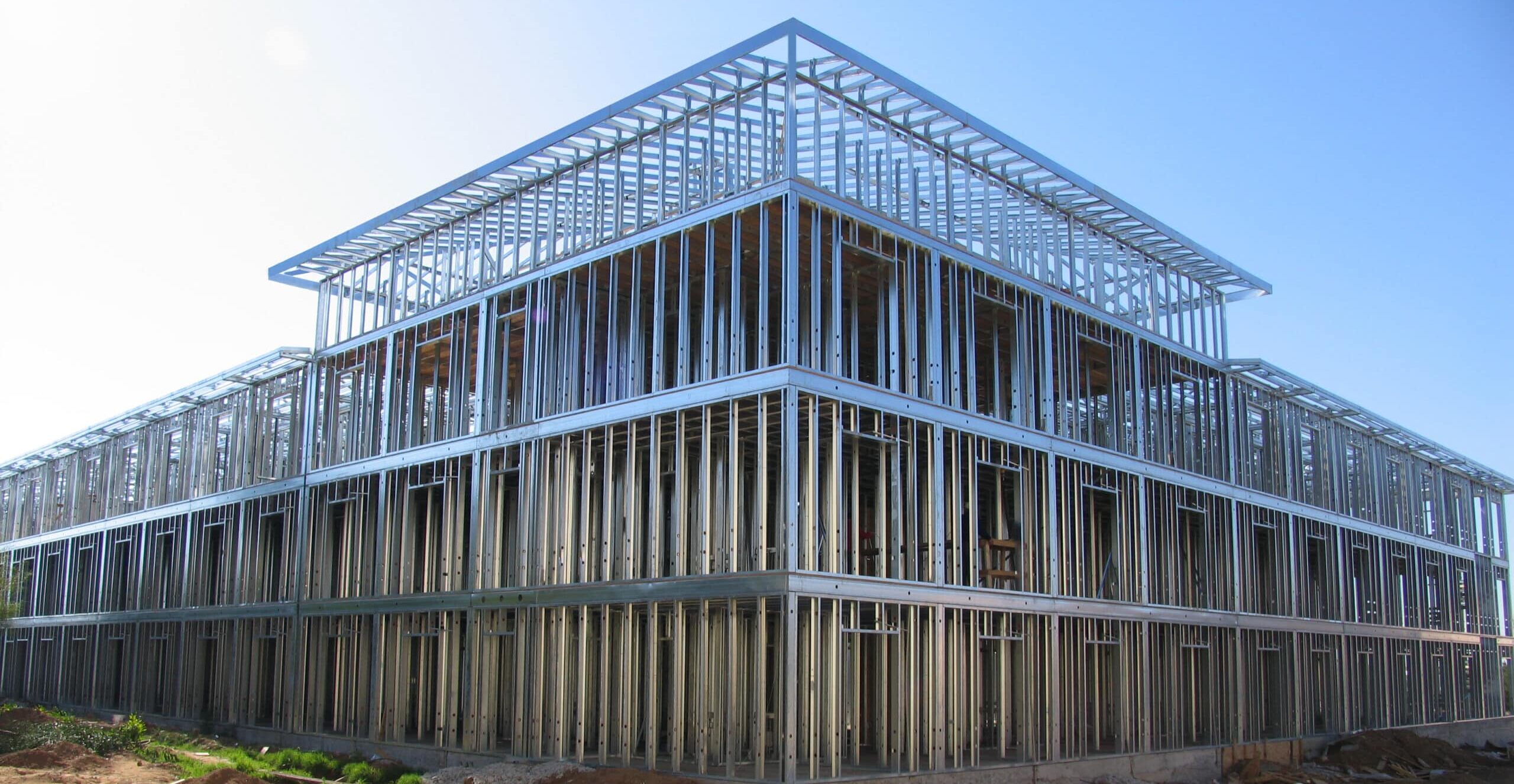

It has been nine months since the February 6 earthquake that left Turkey in mourning. In these days when seasonal conditions are becoming more difficult, construction work in the region continues. Melih Şimşek, Vice Chairman of the Board of Directors of the Turkish Structural Steel Association and Founder of Consera, emphasizes that steel structures, which are 7-8 times more durable than traditional structures and completed 2-3 times faster, can heal the wounds of the earthquake more quickly. The association's research also shows that no steel structure with a share of 2.4 percent in the earthquake zone collapsed.
In all known earthquakes around the world, steel structures have suffered much less damage than others. The Turkish Structural Steel Association's research on the February 6 earthquake also confirms this. However, very few buildings in Turkey are made of steel. According to the March 2023 report by the Presidential Strategy and Budget Department, 86.7 percent of buildings and 95.4 percent of apartments in the earthquake zone are reinforced concrete. Only 2.4 percent of the buildings are steel, while 3.5 percent are masonry and 3.6 percent are prefabricated. The remaining category includes wood, mixed or undefined structural systems. The Turkish Structural Steel Association's research shows that none of these 2.4 percent of steel structures collapsed and caused loss of life. For example, The Museum Hotel in the center of Hatay, built with a modular steel structure system, survived the earthquake without any damage. Unfortunately, the proportion of all steel structures in Turkey is very low compared to reinforced concrete buildings, only 5 percent. 4 percent of this is made up of industrial buildings such as factories.
On the other hand, since steel structures can be built twice as fast as traditional structures, they are also important in terms of helping earthquake victims, who are waiting to return to their normal lives as winter sets in, to recover faster.
Steel resistance to earthquakes
Melih Şimşek, Founder of Consera and Vice Chairman of the Board of Directors of the Turkish Structural Steel Association, reminded that little progress has been made since the 1999 earthquake and said, "The number of houses in Istanbul before 2000 was 4 million 500 thousand, currently 6 million 384 thousand. According to the data of the Ministry, only 695 thousand houses have been transformed by the urban transformation method so far, that is, 16 percent of the pre-2000 buildings were built according to the new regulations. If we assume that all post-2000 buildings are earthquake resistant - which they are not - this means that there are still 3 million 800 thousand houses in Istanbul that are at risk of earthquake. These figures do not include workplaces and social buildings. This is the situation in the most important city of the country. There are 38 million 400 houses in our country. Even calculating how many of them are earthquake-resistant would cause despair, so I can't even reach for the calculator. In short, we have failed in the most important problem of our country."
With half a century and 2.5 million square meters of construction experience, Consera aims to spread steel structures across the country. Şimşek explains why steel structures are more earthquake resistant with the following words: "First of all, earthquakes affect buildings in proportion to their weight. The greater the total weight of the building, the greater the earthquake force will be. For this reason, buildings in the earthquake zone should be built with lightweight materials as much as possible. Steel is the material preferred by developed countries in the world and countries located in earthquake zones. Steel structures are 7 to 10 times lighter than traditional structures, especially reinforced concrete structures, and are therefore less exposed to earthquake forces. In addition, steel-bearing structures are much more reliable against human errors since they are produced in an industrial environment with 100 percent supervision. Their inspection is much easier and possible. The ability of structures to oscillate and flexibility during earthquakes is another issue that prevents them from being damaged. Steel structures are also much more flexible than traditional structures."
It is possible to recover from the earthquake twice as fast
The fact that lightweight and modular steel structures are produced in industrial environments, thus allowing them to operate 24 hours a day regardless of climatic conditions, makes them the ideal choice for rapid construction. Şimşek emphasized that this system is 2-3 times faster in repairing the wounds after an earthquake and said, "The first action that will enable people to return to their lives as soon as possible after an earthquake is to build living spaces very quickly. For example, Japan recovered from the Kobe earthquake in 1995 in just two years and took very important decisions against future earthquakes. It invented seismic isolators for high-rise buildings and used steel systems for rapid construction. Since the load-bearing frames in steel building systems are produced in factories, independent of climatic conditions, by industrial methods, they are 2-3 times faster than traditional methods. This shortens the completion time of the building by at least 50 percent compared to traditional structures. In addition, in modular buildings produced with steel systems, this speed provides time advantages of up to 100 percent, which is very valuable for our country to be able to build fast in order to prepare for possible earthquakes. A city can be restored in five years instead of 10 years."
1999 Earthquake's teachings led to steel
After the 1999 earthquake, Şimşek started intensive researches and trips abroad to find out "How can safer places be built?" and since that year, when he realized that the answer was steel structures, he has been working to popularize this method in the Turkish construction system. Şimşek, who established Turkey's first and largest light steel factory in 2001 for this purpose, describes this process as follows:
"Until the 1999 Earthquake, I was working as the second generation of a family company that mainly built traditional structures. During this period, we had the chance to build a few traditional steel structures. One of them was a textile dyeing factory in Adapazarı-Akyazı Organized Industrial Zone in 1997. In 1999, it was the only factory in the organized industry that was not damaged at all and continued its production. This result was the clearest proof of what steel structure preference means in an earthquake country, both as an engineer and a construction company. Therefore, this job changed our company from the beginning to the end. In those years, there were a few projects with traditional steel structures, but there was no such category as light steel structures. We created the first light steel factory in our country and our engineering team by getting know-how from the USA. Our engineering team designed, manufactured and implemented the first light steel buildings in our country. It made significant contributions to the regulation. Today, I am very peaceful to be a member of a company that has opened an earthquake-resistant building category in our country."
30 percent growth in the last three years
Şimşek, who sees it as a civic duty to work for the development and popularization of steel structures, which will be the most effective solution to the earthquake problem in Turkey, said: "Our country needs this building system very much. As a company, while working to meet the need for permanent steel and modular steel structures in the country, we will continue to produce these structures by increasing our capacity to export them all over the world. We can say that Consera is the only company that employs engineering, production, application and real estate development groups at the same time. Thousands of user experiences, especially in turnkey construction projects, have taught us the most ideal production and construction methods for steel structures. Our team has the knowledge and experience to produce and project according to all standards in the world. Considering that we have grown by 30 percent for the last three years, it is clear that we are taking firm steps forward to reach our goal."