


Architecture in the geography of disaster was discussed:
Safe with modular steel structures an architecture possible
One year has passed since the February 6 earthquake that devastated Turkey. The Istanbul Association of Freelance Architects organized an event on February 21 called "What Does Architecture Do?" conference on how to build safe structures against disasters. Local and foreign experts shared their views in the panels attended by names such as Dr. Marwa Al Sabouni, Uğur Tanyeli, Dr. Chen-Yu Chiu (Cho).
The "What Does Architecture Do?" conference, organized by the Istanbul Association of Free Architects, was held on February 21 at the Sofitel Istanbul Taksim Hotel, where the role, potential and current impact of architecture in a geography that has been devastated by disasters was discussed. The conference, the first of an international series of events, focused on the geography we are a part of, which has been devastated by wars and earthquakes, and evaluated both the "healing role of architecture" and the "hierarchy of needs" theory put forward by American psychologist Abraham Maslow in 1943 through architecture. Architect, Writer and Publisher Dr. Marwa Al Sabouni from Arabic Gate for Architectural News, Architectural Historian Uğur Tanyeli, Architect Dr. Chen-Yu Chiu (Cho), Founding Director of Reyhanlı Center for World Citizens, discussed how to build safe buildings in the geography of disaster in panels organized under titles such as "Architecture for Survival" and "Architecture for Hope".
Housing has entered "a product process"
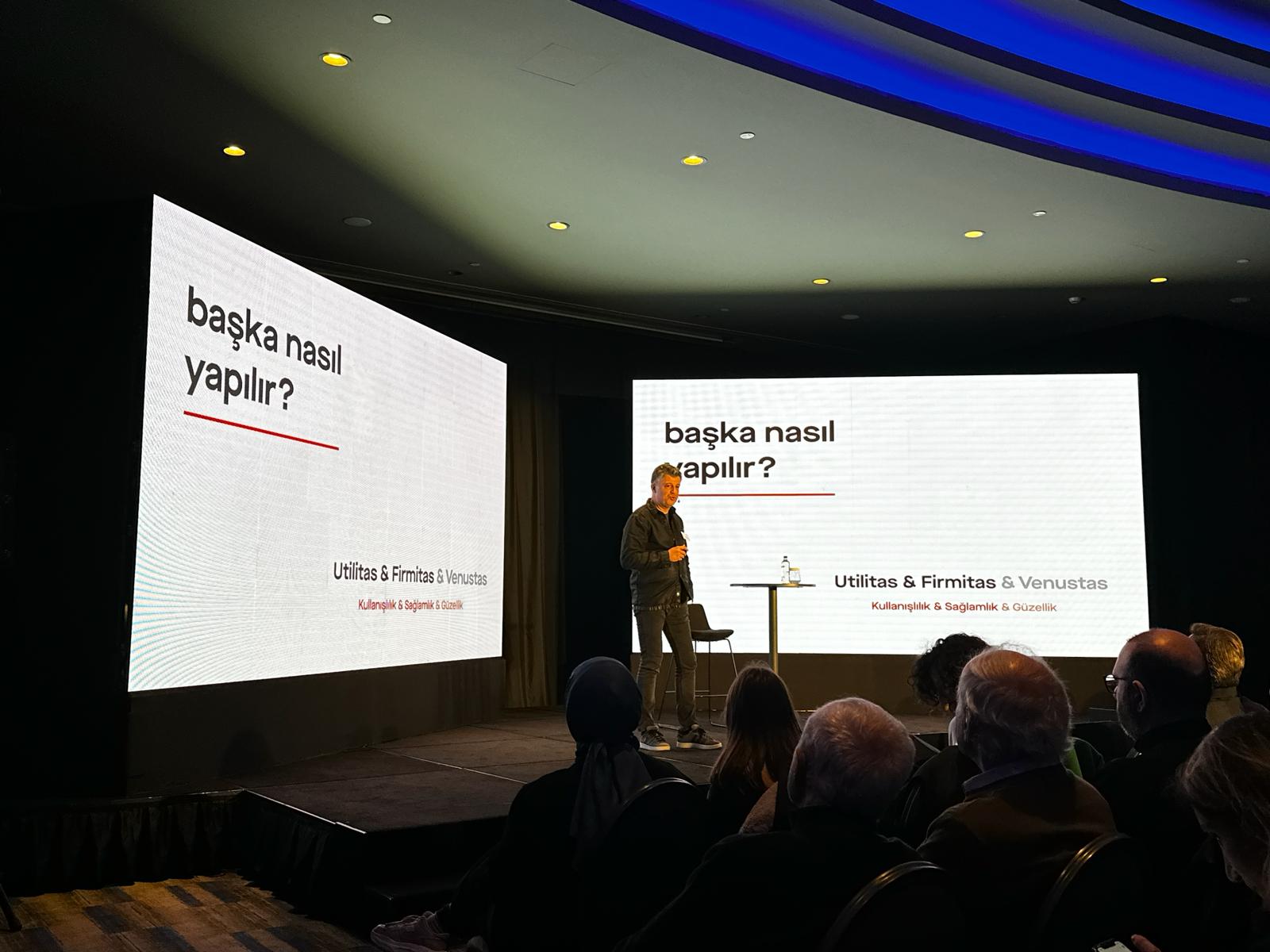
Melih Şimşek, Vice Chairman of the Board of Directors of the Turkish Structural Steel Association (TUCSA) and Founder of Consera, who was one of the speakers of the "How Else?" topic, where non-reinforced concrete construction systems that are not accepted in Turkey due to reasons such as cost, culture and politics, emphasized that we are late in changing our building production habits despite our bitter experiences and said, "If we build structures that will not collapse in earthquakes, we will not have loss of life and property. We will not experience great economic losses. Since earthquakes will continue in our geography, we have to develop fast construction methods. In addition, the construction methods we prefer must contribute to stopping climate change." Citing the example of a 14-storey building consisting of 140 capsules designed by Kishō Kurokawa in 1972 and completed in 30 days in Japan, where there were no losses and destruction despite being in an earthquake zone, Şimşek stated that the way to build earthquake-safe buildings is through modular steel structures. Şimşek quoted Le Corbusier, one of the pioneers of modern high design, as saying "Standardization will one day lead us to perfection. Architecture consists of standards. Standards are the distillation of logic and analysis. We, just like Mother Nature, should turn to economic forms" and reminded that Le Corbusier predicted 100 years ago that the issue of housing was entering a "product process".
"We can be the country with the largest modular construction industry"
Emphasizing that the modular steel construction method is controllable and economical by minimizing human error due to the fact that most of the production is done in the factory, Şimşek said that it also responds to the need for rapid urban transformation and is necessary for sustainability. In his speech, Şimşek asked, "What is our biggest problem?" and said, "Earthquake in the near future; natural disasters in the medium and long term... Talking is not enough, we must act as soon as possible. Doctors will find the cure for cancer, but we will apply the cure for earthquake, which is the cancer of our world." Drawing attention to the industrialization of the construction sector, Şimşek pointed to Ikea-Skanska's Boklok and Elon Musk's Boxable brands and reminded that strong companies have started to take part in the modular construction sector.
"We may not be the country that produces the most electric cars in the world, but the only obstacle to becoming the country with the largest modular construction industry is ourselves," Şimşek said:
"The happy and sad part of the job is that Turkey already has everything it needs to have earthquake-safe buildings and to become the country with the largest modular steel construction industry in the world. Look, 2 million tons of structural steel is required to produce 300 thousand houses in a year. Turkey's capacity is 50 million tons. We need 72 thousand human resources. 2023 data shows that there are 3.5 million unemployed. We need 81 factories of 20 thousand square meters. This corresponds to the closed area of 6 TOGG factories. In summary, it is possible to produce one million modular steel houses in three years. For this, we only need to change our routine and establish modular steel construction industries. In this way, we will have earthquake-resistant structures and we will establish a brand new exportable industry."

